
Developing a Molecular Toolkit to ENABLE all to apply CRISPR/Cas9-based Gene Editing in planta
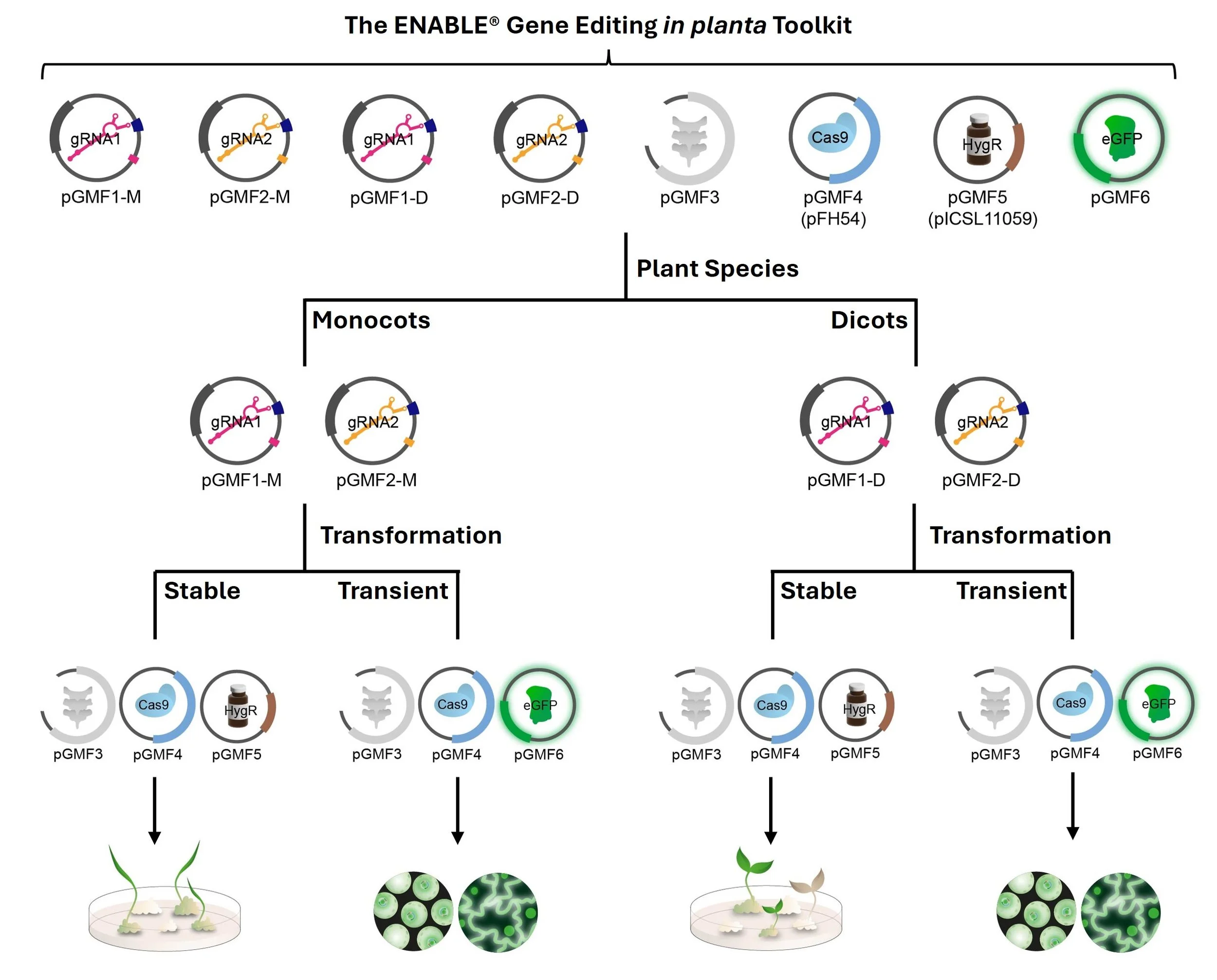
Gene editing, especially the CRISPR/Cas9 system, has revolutionized trait development in crops. However, large parts of the world are missing out on applying CRISPR in planta. Here, we present the ENABLE® Gene Editing in planta toolkit, a minimal molecular toolbox allowing users to create a CRISPR knockout vector for transient or stable plant transformation in two simple cloning steps. We validate the toolkit in rice protoplasts and in Arabidopsis thaliana plants. The ENABLE® kit is designed to be utilized specifically by users in low and middle income countries who are new to CRISPR technology by providing a simple workflow, extensive accompanying protocols as well as options for low cost methods for cloning verification and gene editing verification in planta.
Attitude and application: judge a crop on its potential and not breeding technology
In comparison with technological advancements in other fields, applications of biotechnology in agriculture elicit strong, divisive opinions. The polarizing debate over genetically modified organisms (GMOs), or transgenic crops, has spanned decades. Opponents have focused heavily on a single trait: herbicide tolerance. We argue that newly developed crops should be judged based on their potential, rather than tainted based on association with unpopular applications.

Current advancements and limitations of gene editing in orphan crops
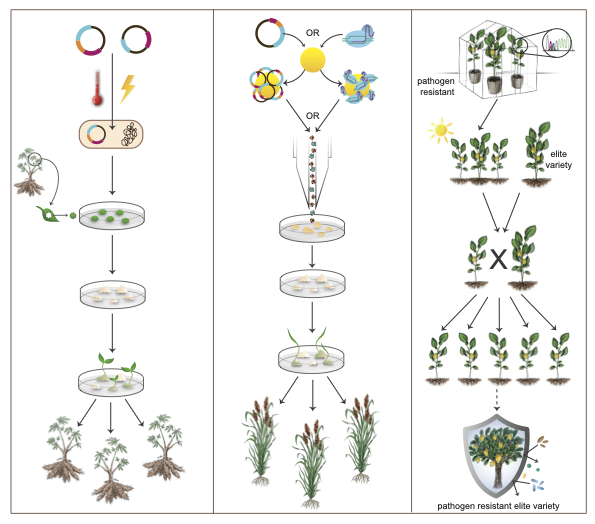
The international collaboration between all stakeholders involved in crop improvement is vital to provide equitable access and bridge the scientific gap between the world’s most economically important crops and the most under-researched crops. This review describes the mechanisms and workflow of CRISPR/Cas in planta and addresses the challenges, current applications, and future prospects in underutilized crops.
Pandemics of people and plants: which is the greater threat to food security?
As the world is gripped by the Coronavirus Disease 2019 (COVID-19) pandemic, plant epidemics are spreading silently, affecting crop yields and the global economy. Parallels have been drawn between the COVID-19 pandemic and the ongoing plight of plant diseases. While 7.4 million people have been infected by Severe Acute Respiratory Syndrome Coronavirus 2 (SARS-CoV-2), the virus causing COVID-19, 822 million people, over 10% of the world’s population, are currently facing food insecurity.


The inequity of biotechnological impact
Less than 1% of the total population of the developing world is positively affected by biotechnological innovation. In over two decades, 526 genetically engineered events, or bioengineered (BE) traits, in 32 crops have been approved in 44 countries (ISAAA database, 2020). Of these 44 countries, 38 are high-income, representing 73% of the developed world. Just six represent low-income countries, including four in Africa (ISAAA database, 2020).